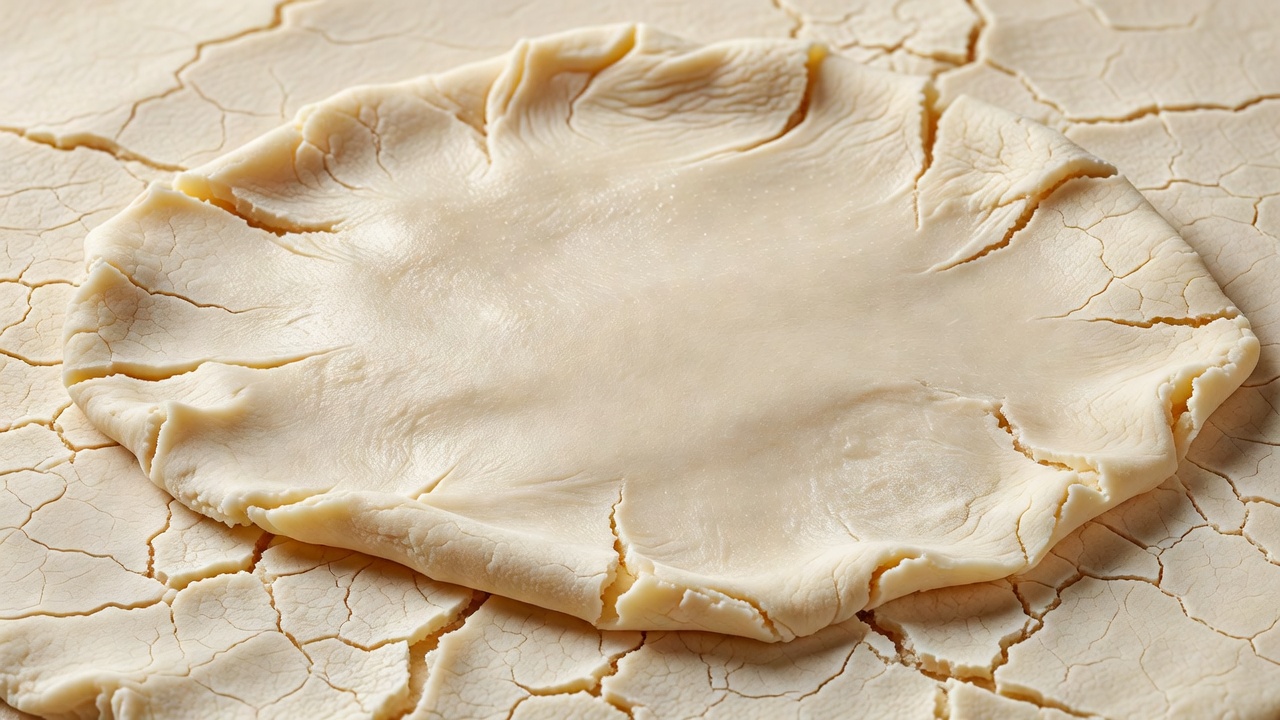
Check the interior before adding water
A rough dough immediately after mixing is not necessarily under-hydrated. Break or cut a small piece and look inside. If the center holds together while the exposed surface cracks, the dough may have developed a dry skin. Cover the remaining mass properly and compare a freshly exposed face with the old outside.
If loose flour remains throughout the interior, press the mixture together and give it a short covered pause. Water needs time to distribute. Only then add a measured 1–2 g of water to a small trial batch, knead it in and wait again. Record the final water total so the next batch begins closer to the useful range.
Whole-grain flour, coarse semolina and different brands can absorb differently. A familiar formula does not eliminate the need to observe. Conversely, constant dusting during kneading can make a correct starting formula progressively drier. Keep the dusting flour separate from the measured mixing flour so you can notice how much you use.
Let recoil identify the next test
If a sheet shrinks toward its original shape as soon as you lift the pin, pause before changing the recipe. Cover it for about 15 minutes and roll the same small section again. A noticeable improvement points toward relaxation as the useful intervention. It is not proof that the initial flour choice was wrong.
If repeated covered rests do little, consider whether the dough is exceptionally stiff, the flour is very strong or the piece is simply too large to handle comfortably. Test a smaller portion before adding water to the entire batch. For the next batch, compare a slightly higher hydration or a less strong flour, but not both together.
More kneading is not always the answer. Once a dough is cohesive, intense additional work can make the immediate rolling task harder. Use enough kneading to join and organize the dough, then let a rest and a small rolling test tell you what happens next.
Separate surface moisture from structure
A dough that leaves a wet film on the board may contain too much liquid for the method, may have warmed during handling or may simply need a little dusting. Look at where it sticks. A tacky underside with a manageable top suggests a board-contact problem; a soft mass that smears throughout suggests a broader formula or handling issue.
For a current batch, use modest dusting and work in smaller pieces. If necessary, give a rolled sheet a brief, watched surface-drying pause before folding. Do not let it become rigid. Dust between loose folds and open the strands immediately after cutting. Storing damp ribbons in a compressed pile encourages them to fuse.
For the next batch, reduce added liquid slightly while keeping flour and rest constant. Resist burying a wet dough in flour without recording it. That may salvage dinner, but it removes the clean comparison you need to understand why the original dough stuck.
Read a cooked cross-section
A noodle can be soft at its surface and still have a dry center. Uneven thickness, very thick cutting or insufficient cooking can produce that combination. Cook a small test portion longer and compare it with the original sample. If the center hydrates before the outside becomes unpleasantly soft, the simplest correction may be cooking time.
If the outside falls apart while the middle remains floury, inspect your sheet for thick ridges or folded, compressed sections. More cooking cannot make an uneven noodle uniform. Roll the next portion more consistently and cut a few sacrificial samples across the sheet to inspect the edges.
Do not confuse every firm bite with undercooking. Some styles are intentionally resilient. The useful distinction is between a fully hydrated resistance and a dry, chalky core. Taste safely after cooking and cooling a sample; do not assess raw flour by chewing the uncooked dough.
Test time before rebuilding the formula
If noodles break during cooking, first watch the boil and your stirring. Delicate ribbons do not need aggressive handling. Compare a gently stirred small batch, then check a sample earlier than usual. A thinner sheet may be ready sooner than your memory of a thicker one suggests.
If shorter cooking still gives weak strands, consider flour choice, excessive non-wheat substitution or damage during rolling. A high proportion of buckwheat or bran changes the network. Return to a plain wheat control before deciding the whole method is unreliable. Sauce finishing also counts as cooking: noodles can soften further in a hot pan or broth.
Keep safety separate from texture troubleshooting. An unusual odor, visible mold or unsafe storage history is a reason to discard dough, not a prompt to fix it with extra flour or boiling. Appearance and smell cannot establish safety on their own. Refrigerate perishable dough promptly, and freeze portions if you do not plan to use them soon.